



Ask our opticians

Ask Now

Multifocal Lenses: Your Solution for Presbyopia

By Amanda Albuquerque
Reviewed by Maria Horan FBDO

Maria Horan FBDO

Reviewed by

Maria Horan FBDO
Maria holds a BSc Honours in Ophthalmic Dispensing and has over 17 years of optical experience.

Multifocal lenses make it easy to see clearly at every distance. Learn how they work, what to expect when you switch and how to find the right pair for your lifestyle.
Woman rubbing her eyes holding eyeglasses

Overview

If you are experiencing presbyopia, the natural loss of near vision after age 40, multifocal lenses can be the ideal solution. 

They provide vision correction from all distances, from near to far, in one seamless pair of glasses, with no visible lines and no need to switch between multiple frames. 

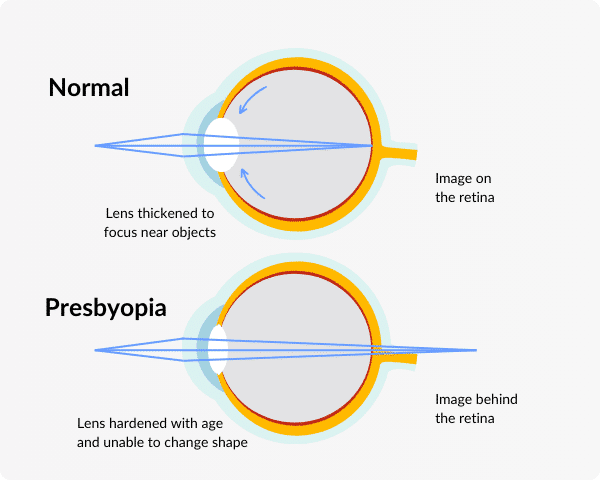
Normal eye vs eye with presbiopya

What is presbyopia?

Presbyopia is a natural, age-related change that can worsen close up vision, making it harder to focus on close objects. The lens inside your eye stiffens over time, so reading small text or working on your phone becomes more difficult.

Common signs include:

  • Needing to hold reading material farther away
  • Eye strain or headaches during near work
  • Blurry vision at close range

It is normal and happens to everyone eventually, even if you have always had perfect vision.

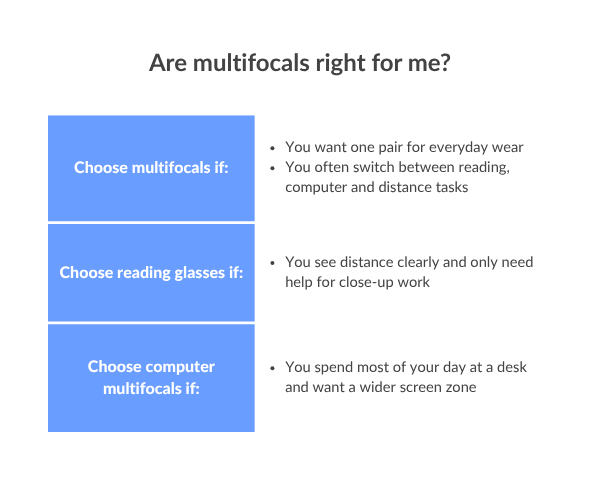
Should I choose multifocal lenses?

If you often struggle to see up close or need different pairs for reading and distance, it may be time to wear multifocal glasses. They are the most convenient all-in-one option if you need help seeing up close.

They correct near, intermediate and distance vision in a single lens with no switching between pairs and no visible lines.

Who should wear multifocals

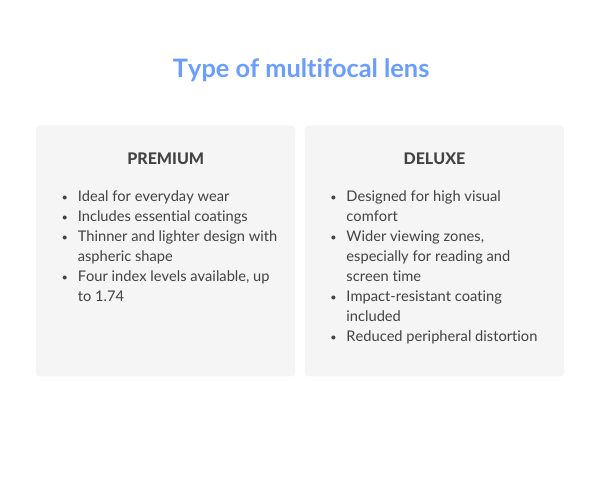
We offer two different kinds of multifocal lenses. Premium multifocals offer wider clear areas and easier adaptation, while standard ones balance comfort and value.

EXPERT'S TIP!

“If it’s your first time using multifocals, choose a premium design. The wider clear zones and smoother transitions make adaptation easier and faster.”

Maria Horan, Dispensing Optician

Benefits you will notice

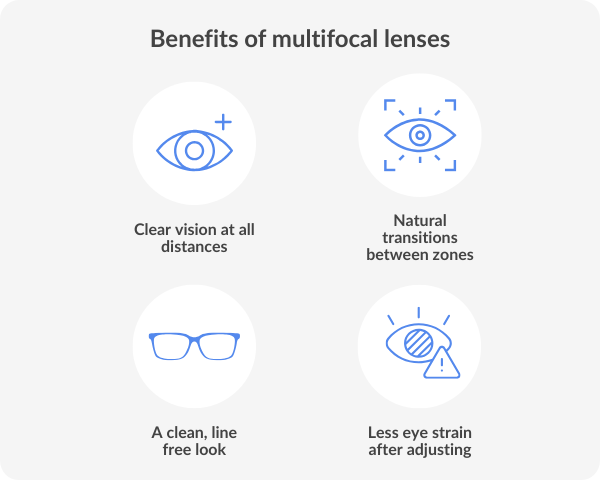
Benefits of multifocal lenses

What to expect when you switch

Most people adapt to multifocal lenses within days to a couple of weeks. During that time:

  • Point your nose at what you want to see to stay in the clearest area
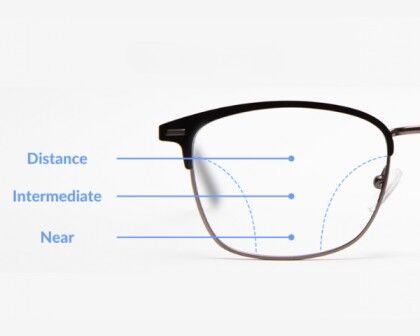
  • Use the top for distance, middle for screens and bottom for reading
  • Wear them full time and avoid switching back to your old pair
Structure of multifocal lens

Get the fit right

Measurements matter. Multifocal lenses rely on precise pupillary distance and fitting height. A dispensing optician ensures each zone lines up correctly.

Frame height counts. Choose a frame tall enough to fit all three vision zones comfortably. Your optical dispenser can recommend shapes designed for multifocals.

Multifocal lens options

All multifocals correct presbyopia, but design affects comfort and clarity:

Types of multifocal lens

Common Questions

How long will it take to adapt?

Usually within one to two weeks. Consistent wear helps you adjust faster.

Why do the edges feel blurry at first?

Multifocals blend multiple powers into one lens. The peripheral blur fades as your eyes learn to follow the corridor.

Can I wear them for driving or sports?

Yes. Tell your optical dispenser your main activities so the design can be tailored to your needs.

Man wearing multifocal lens

Next Steps

To get the best results from your multifocal lenses, clean them regularly, add an anti-reflective coating to reduce glare and schedule annual eye exams to keep up with changes in your vision. 

When you are ready to find the right lenses for your needs, consider the options below:

  • Want one-pair convenience? Try multifocal lenses.
  • Work mostly on a screen? Choose  computer multifocals.

Unsure which tier suits you? Ask our in-house certified optical experts for a quick recommendation.

Leave a comment

Your email address will not be published. Required fields are marked *