



Ask our opticians

Ask Now

Ask An Optician: Why Do My Progressives Feel "Off"?

By Amanda Albuquerque
Reviewed by Maria Horan FBDO

Maria Horan FBDO

Reviewed by

Maria Horan FBDO
Maria holds a BSc Honours in Ophthalmic Dispensing and has over 17 years of optical experience.

New progressives feeling “off”? This optician-reviewed guide explains why adaptation can cause blur, distortion, or discomfort.
Woman with a headache holding progressive eyeglasses in her hand and massaging her temple

Overview

New progressive lenses can feel “off” when your eyes, brain, or frame alignment haven’t fully adjusted. Most early discomfort comes from normal lens adaptation, on incorrect frame fit, or a prescription issue. 

The good news: many problems are easy to solve with minor adjustments or professional rechecking.

Common problems of progressive lenses

How do progressives work?

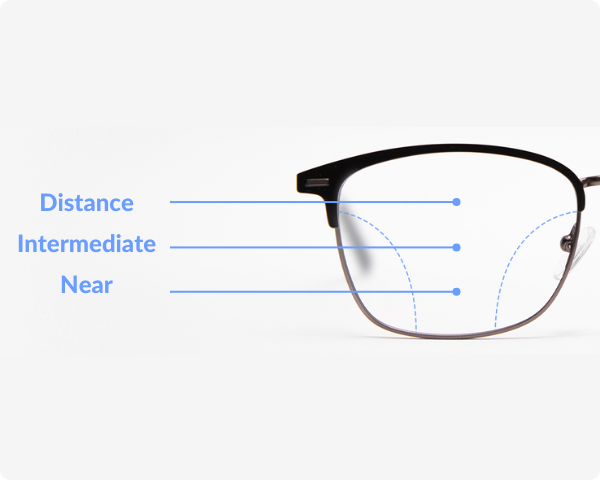
Progressive lenses combine three prescriptions in one seamless lens:

  • Top: distance vision
  • Middle: intermediate (computer) vision
  • Bottom: near or reading vision
Structure of progressive lenses

Instead of visible lines like bifocals, progressives use a gradual “corridor” that allows your eyes to move naturally between zones.

Because posture, eye movement, and frame shape vary from person to person, your brain needs time to learn this new visual layout. This is why adaptation is normal during the first days or weeks. 

Common problems and solutions

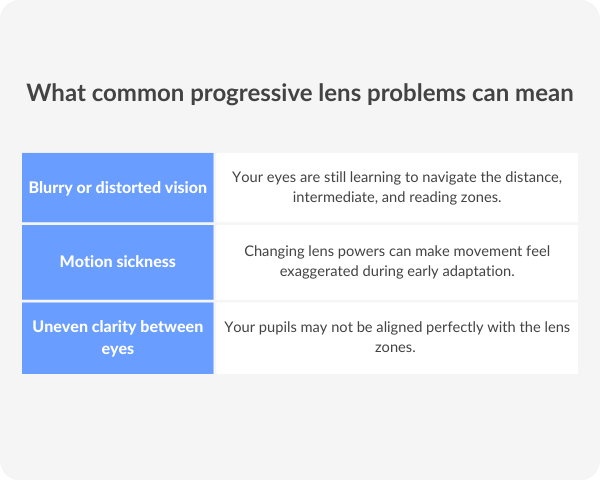
Blurry and distorted vision

Progressive lenses contain multiple viewing zones, and your eyes need to learn how to navigate them. 

During the first days, your brain is still mapping out the distance, intermediate and reading areas. This can lead to temporary blur, especially if you move only your eyes instead of your head.

The peripheral edges also naturally have more distortion, so glancing sideways before you’ve adapted can feel disorienting.

Blurry vision

Fix: Move your head, not just your eyes, when shifting focus. Point your nose toward what you want to see. This will train your visual system faster and reduce peripheral blur.

Motion sickness

As you walk, shift your gaze, or turn your head, the changing lens powers can create a brief sensation of movement, almost as if the ground or objects are shifting. 

Fatigue, long hours at a screen, or switching between old and new glasses can make the sensation more noticeable in the early stages.

Fix: Use slow, steady head movements instead of quick eye shifts. When turning or looking around, guide your vision by pointing your nose toward what you want to see. 

Also check your frame fit. If your glasses sit too low, slip forward, or have the wrong tilt, your eyes may fall into the distorted areas more often. A small adjustment can dramatically reduce the “swim” sensation.

Uneven clarity between eyes

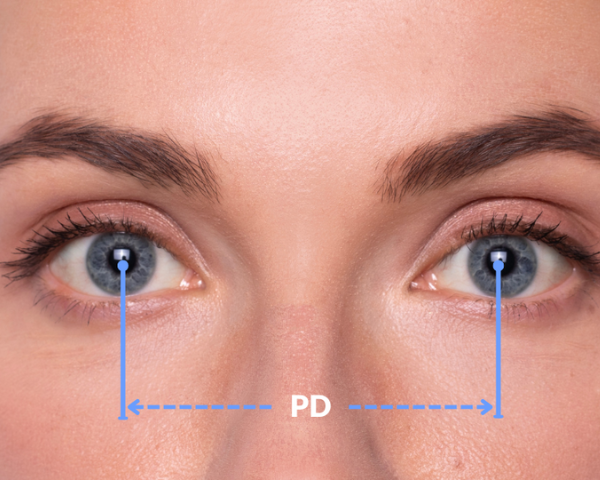
Progressives depend on the precise alignment with your pupils, so if this measurement is even 1–2 mm off, each eye may be looking through a slightly different part of the lens. 

This can create clarity differences, visual fatigue, or a subtle pulling sensation as your brain tries to merge the two images.

EXPERT'S TIP!

“Even a 1–2 mm shift in lens alignment can make progressives feel ‘off.’ Always have your frames adjusted while wearing them—fit and lens centration go hand in hand.”

Maria Horan, Dispensing Optician

What is the PD distance

Fix: Have your prescription and lens centration double-checked. Opticians can adjust the frame tilt or remake the lenses if needed.

If your progressives still feel off…

Progressive lenses offer seamless vision correction, but they depend on patience, precision, and a proper fit.

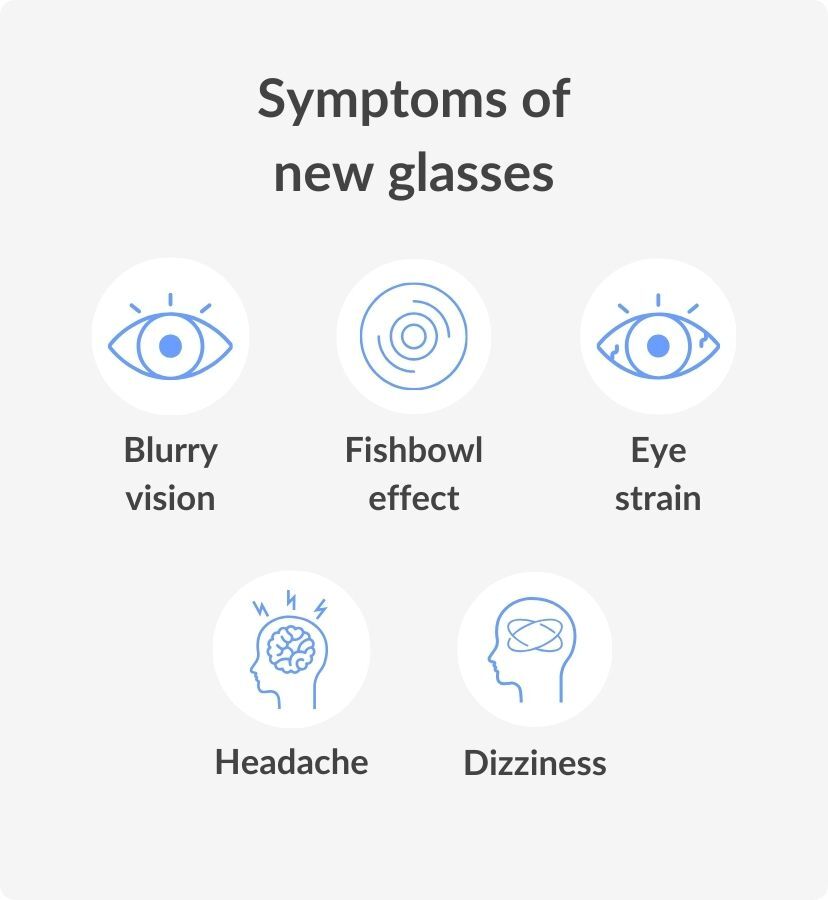
Symptoms of new glasses

If you’ve waited 10-14 days and have tried these adjustments, speak to one of our certified optical experts. They can assess your frame fit, prescription and lens alignment to ensure you’re seeing your best.

Leave a comment

Your email address will not be published. Required fields are marked *