We offer free basic 1.5 index lenses on most prescription eyeglasses. We provide opportunities to upgrade and add features during checkout. We make shopping online for your glasses simple, efficient and safe.
Best Price Guarantee
If you find a lower price online within 14 days of purchase, we will BEAT IT by R30!!
Deciding on a pair of glasses is harder than it seems, so we've put together some tips to help you make the best choice.
Overview
Choose glasses by matching frames to your face shape, ensuring they suit your prescription needs, and selecting styles that fit your lifestyle. Comfort, proper fit and functionality should guide your choice.
Choosing frames based on face shape
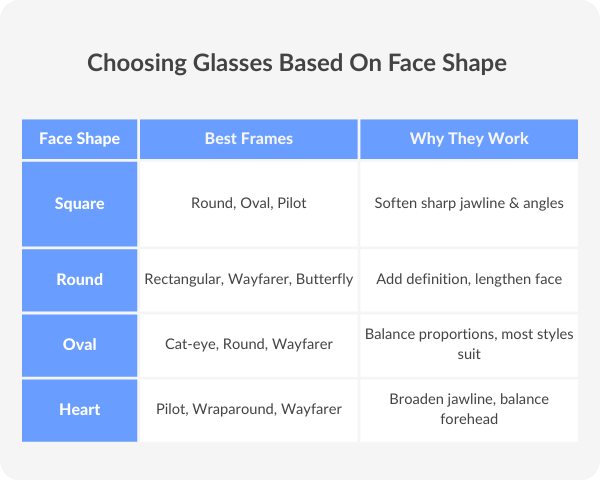
There are four main face shapes: square, round, oval and heart-shaped. Identifying yours is the first step to finding frames that truly complement your features.
Not sure which shape you have? This guide will help you figure it out.
Square faces: Choose round, oval, or pilot frames to soften strong angles.
Round faces: Rectangular, butterfly, or Wayfarer frames add definition and make the face appear longer.
Oval faces: Oval faces are versatile and can pull off most frame shapes, including oversized, as long as the frame width suits your face.
Heart-shaped faces: pilots, wraparounds, or Wayfarers balance the forehead and jawline.
Choosing frames based on prescription needs
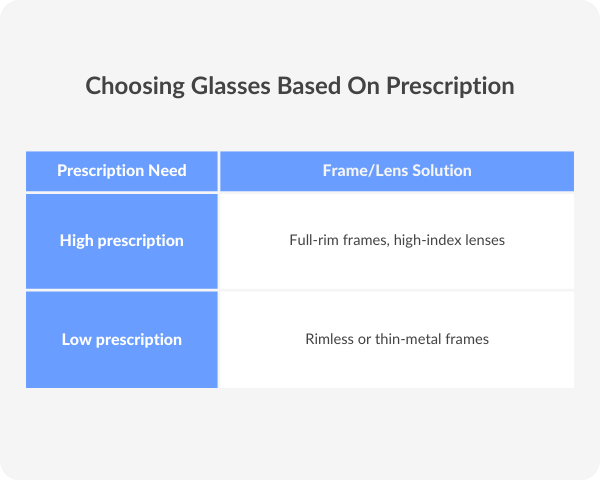
Your prescription strength plays a significant role in which frames will fit best and look most flattering.
Strong prescriptions: Higher prescriptions usually mean thicker lenses. Full-rim acetate or thick plastic frames help hide lens edges, and high-index lenses can keep them thinner and lighter.
Mild prescriptions: With lighter prescriptions, you have more flexibility; rimless or delicate frames can be a stylish, lightweight option.
Choosing glasses based on lifestyle
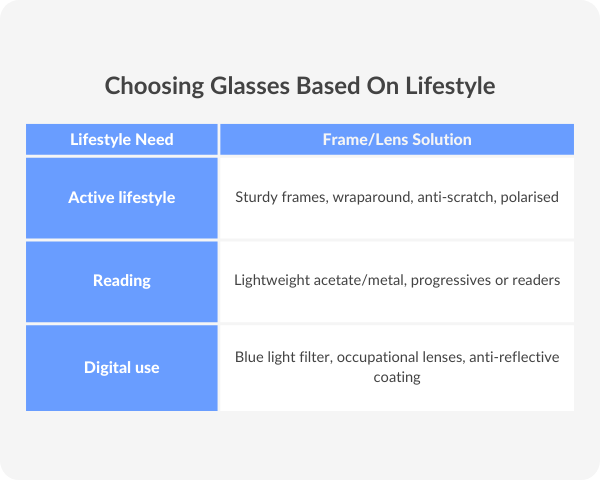
Whether you play sports or spend extended periods of time exposed to digital screens, your glasses should support your daily activities, not disrupt them.
Digital users: Blue light filters may improve comfort for some, while anti-reflective coatings reduce glare; both can help during long screen sessions.
Choosing glasses based on colour palette
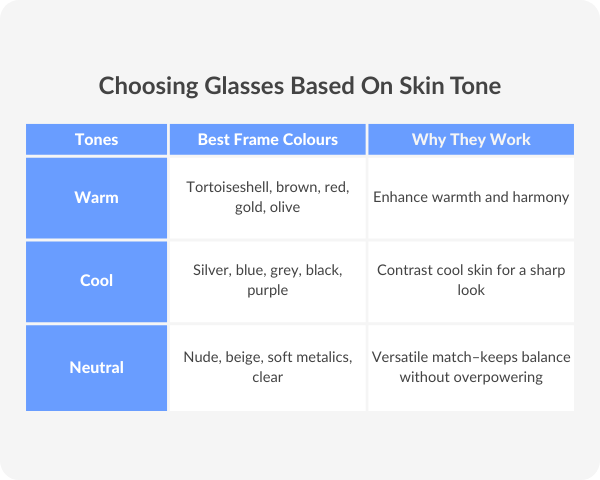
Your skin tone, eye colour, and hair colour all influence how glasses look on you. Matching frames to your colour palette can enhance your natural features and make your glasses feel like part of your style.
Warm palette: If you have gold undertones, such as green or brown eyes and warm hair like auburn or golden blonde, choose frames in earthy shades—brown, amber, olive—or warm metals like gold to enhance your natural warmth and create a harmonious, flattering look.
Cool palette: If you have pink or blue undertones, such as blue or grey eyes and cool-toned hair like ash blonde or black, opt for frames in cool shades—blue, grey, black, or purple—or cool metals like silver to complement your features and add a polished, balanced contrast.
Neutral palette: If your undertones are balanced, like hazel eyes or hair in a mix of warm and cool tones, you have flexibility. Subtle frames like nude, beige, soft metallics, or clear frames keep a natural, versatile look, while bolder colours can make a stylish statement.
While these guidelines can help, but the best colour is one that makes you feel confident.
Know your frame measurements
Getting the right glasses isn’t just about style, frame measurements decide comfort and fit. The key numbers to know are:
Lens width: how wide the glasses sit across your face
Bridge width: the space between lenses over your nose
Temple length: the arms that rest over your ears
These measurements ensure your glasses don’t slip, pinch, or feel unbalanced.
EXPERT'S TIP!
“I recommend using your current measurements as a starting point, but keep in mind they’re not always definitive. Just like clothing sizes, frame fits can vary slightly between different brands and styles.”
Neggie Saadatpay-Wright, Dispensing Optician
What to keep in mind when choosing glasses
When it comes to choosing glasses, comfort, fit and function matter most, your frames should suit your face shape, complement your skin tone, and feel effortless to wear all day—no slipping, pinching, or constant adjusting.
The best pair balances style, durability and everyday ease, helping you see clearly and look confident.
Still unsure? Try our Virtual Try-On tool to see how frames fit your face, or reach out to our opticians for personalised advice and guidance.