














Best Sunglasses for Sensitive Eyes: The Complete Guide to Lenses & Protection

Reviewed by
Maria Horan
Overview
What to prioritise | Why it matters |
|---|---|
UV400 protection | Blocks all harmful rays under 400nm |
Polarised lenses | Eliminates reflected glare from roads, water, and glass |
Grey tint | Best general-purpose tint for light sensitivity |
Anti-reflective (AR) back coating | Cuts out reflections from artificial lighting |
Wraparound or large frame | Cuts light leakage from the sides and top |
Photochromic lenses | Ideal if you move between bright outdoors and dim indoors |
High-index lens (1.67+) | Keeps lenses thin and light for stronger prescriptions |
Why are some eyes more sensitive to sunlight?
Light sensitivity, also known as photophobia, ranges from mild squinting in strong sun to genuine pain in normal indoor lighting. For most people it falls somewhere in between: certain conditions make it manageable, others make it exhausting.
A few factors play into how sensitive your eyes are. People with lighter-coloured irises, such as blue eyes, tend to have less pigment to filter incoming light, so they feel glare and brightness more acutely.
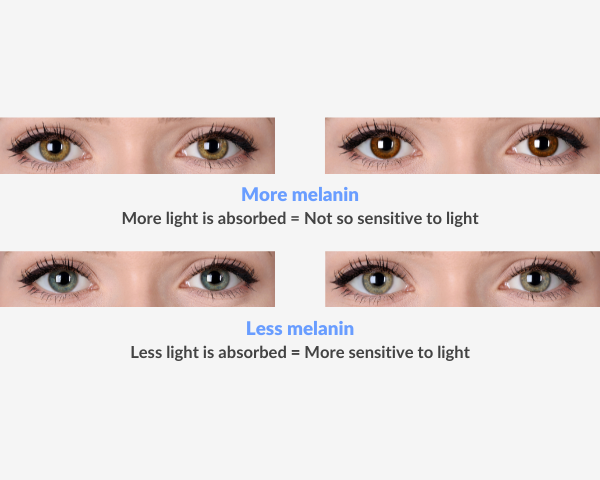
Environmental triggers make it worse. Reflected glare off water, snow, wet roads, car hoods and glass buildings sends concentrated light directly at the eye, even on days that don’t feel especially sunny.
That’s why the right lens does more than just dim things down. It has to target the specific kind of light causing the problem.
Matching lens choice to type of sensitivity
Migraines and light sensitivity
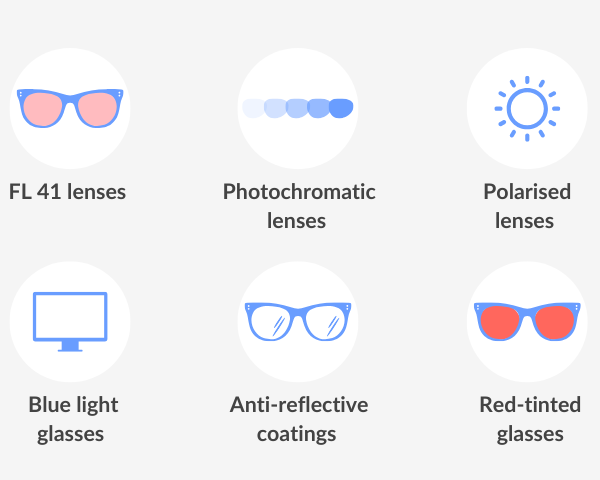
Some people with migraine-related photophobia find relief with FL-41, a rose-amber tint developed to filter wavelengths commonly associated with migraine triggers.
Pair it with polarised lenses for extra glare control.
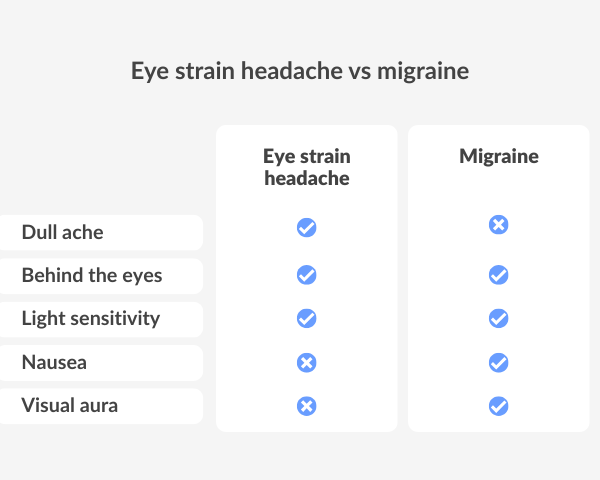
Frame coverage matters too; side light can be enough to trigger a reaction for some people.
Dry eyes and wind sensitivity
If your sensitivity is tied to dry, irritated eyes rather than pure light reaction, the frame does as much work as the lens. Wind reaching the eye speeds up tear evaporation and makes discomfort spike fast.
A frame that sits close to the face, with a good seal around the brow and sides, makes more difference here than switching to a darker tint.
Post-surgery or condition-related sensitivity
After cataract surgery, LASIK, or other procedures, eyes can be intensely light-sensitive for weeks or months.
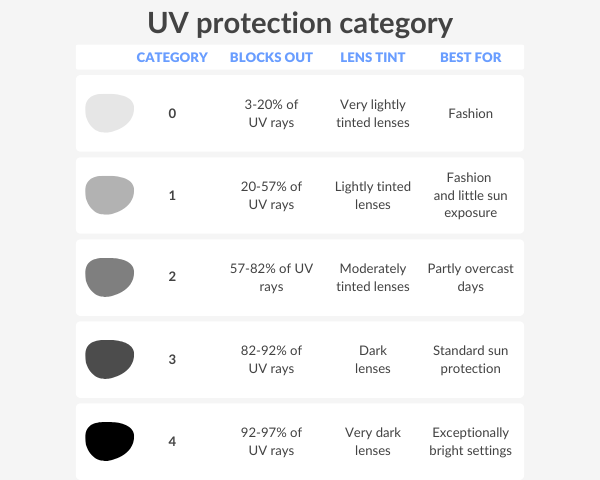
People with conditions like uveitis, glaucoma, aniridia, or albinism often need higher-density tints (category 3 or 4, see lens categories below) and should take guidance from their optician or ophthalmologist on what’s appropriate.
General everyday light sensitivity
For people whose eyes simply find strong sunlight uncomfortable without a specific underlying cause, the standard combination works well: a polarised grey lens in a well-fitting frame.
In many cases, a quality polarised grey lens and good frame coverage are enough to improve comfort outdoors.
The most important lens features for sensitive eyes
UV400 protection: the baseline
Proper UV protection is a non-negotiable for light sensitive eyes.
UV400 protection blocks 100% of ultraviolet rays up to 400 nanometres, covering both UVA and UVB.
Without UV protection, dark lenses can give a false sense of protection by reducing visible light while still allowing harmful UV rays to reach the eyes. Always check that any sunglasses carry the UV400 label.
Polarised lenses
Polarisation targets reflected glare specifically. When light bounces off a horizontal surface, such as a road, the sea and a car hood, it travels in a concentrated horizontal direction that creates intense visual discomfort.
A polarised lens contains a filter that blocks this horizontal light while letting normal vertical light through. The result is dramatically clearer, more comfortable vision in bright conditions.
For many people with sensitive eyes, polarisation is one of the most noticeable upgrades for everyday comfort.
Lens tint colors
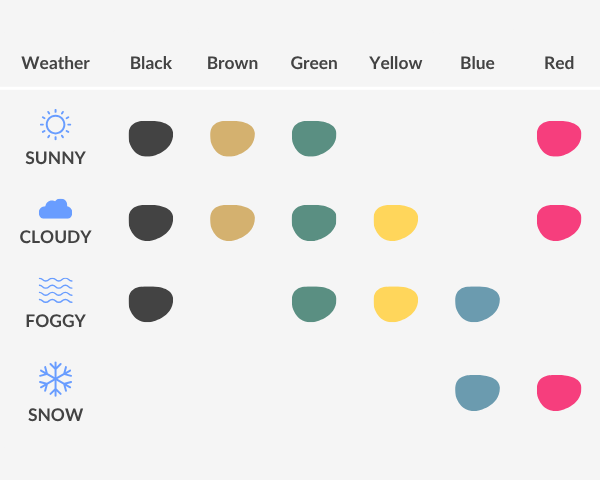
Tint choice depends on when and where your eyes struggle most.
Grey is the most versatile option. It reduces overall brightness without shifting colour perception, making the world look natural rather than warmer or cooler. For general light sensitivity and everyday outdoor use, grey is the safe, effective default.
Amber and brown lenses boost contrast by filtering blue wavelengths. The world appears slightly brighter in variable or overcast conditions, which suits driving, cycling and outdoor sports. Good for people who find flat light uncomfortable as well as direct sun.
Green strikes a middle ground. It reduces glare, preserves colour balance reasonably well, and is considered one of the most comfortable tints for extended outdoor wear.
FL-41 (rose/amber) is the tint specifically associated with migraine and photophobia management. It filters a specific green-blue portion of the spectrum linked to light-triggered headaches. Worth seeking out if migraines are part of the picture.
Yellow improves contrast and depth in low light but offers minimal protection in intense sun. Not suitable as a primary tint for sensitive eyes in bright conditions.
Lens coatings that make a real difference
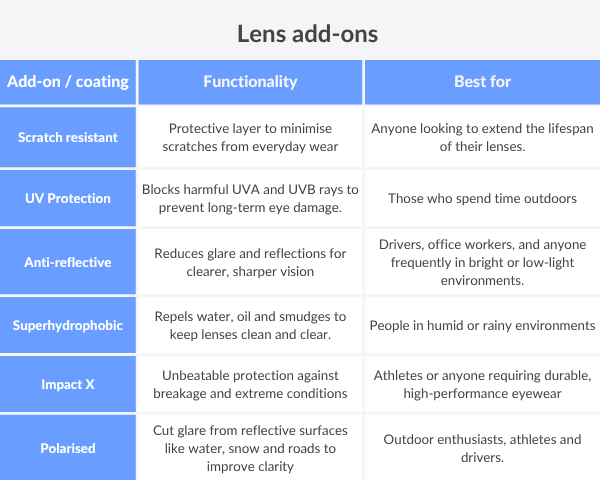
Anti-reflective (AR) coating on the back surface is particularly important for sensitive eyes. Most people think of glare as coming from in front, but light also reflects off the inside back surface of the lens into the eye.
A back-surface AR coating stops this, eliminating a source of strain that many people don’t realise exists.
Mirror coating adds an external reflective layer that bounces additional brightness away. Useful in high-glare environments like skiing or sailing, and it reduces the light reaching the lens without needing a heavier tint. Doesn’t replace polarisation, but complements it.
Scratch-resistant coating protects the optical surface. Micro-scratches scatter light unpredictably, and as a result, the eye is constantly trying to compensate, fatiguing faster. A well-maintained lens surface is a comfort issue as much as a durability one.
EXPERT'S TIP!
“Pay attention to where the light bothers you most. If glare from roads and water is the problem, prioritise polarisation. If side light leaves you squinting, a larger or wraparound frame may provide more relief than switching to a darker tint.”
Maria Horan, Dispensing Optician
Frame styles for sensitive eyes
The best lenses can still underdeliver if the frame lets light in from the sides, sits too far from the face, or creates pressure that distracts all day.
Coverage is the priority for sensitive eyes. Larger lenses and frames that sit close to the brow block more of the ambient light that creeps in from the top and sides.
Oversized styles and wrap-inspired silhouettes provide extra coverage while still offering a wide range of everyday style options.
Wraparound frames offer the most comprehensive side protection. Modern wrap designs have moved well beyond purely sporty aesthetics — there are wraparound-influenced styles that work for everyday and professional wear.
Fit matters more than most people realise. A frame that sits away from the face, gaps at the temples, or slides down the nose allows light in from multiple directions. The most protective frame is one that sits consistently in place with minimal gaps.
If you’re buying online, paying attention to frame dimensions — lens width, bridge fit and temple length — matters for this reason.
Weight and materials contribute to long wear. A heavy frame creates nose and temple pressure that compounds over the course of the day, making everything feel worse.
Lightweight materials — TR90, titanium, quality acetate — deliver the same coverage without the fatigue. This matters most for people who need to wear sunglasses for extended stretches.
Frames to avoid for sensitive eyes
A few things that consistently make sensitive eyes worse, regardless of how good the rest of the pair is:
Fashion sunglasses with no UV rating. A dark tint without proper UV protection may leave your eyes exposed to harmful UV rays while making the lenses feel protective.
Very small or narrow lenses such as trend-driven micro frames offer minimal coverage and leave most of the eye area exposed to ambient light and glare from the periphery.
Flat frames that sit away from the face leave a gap between the frame and skin that becomes a channel for light. A frame that sits 10–15mm away from your face at the sides defeats the purpose of any tint.
Find the right pair for you
Sensitive eyes often need more than a darker lens. The right sunglasses combine UV protection, glare reduction, appropriate tinting and a comfortable fit.
Start with UV400 and polarisation as the baseline, match the tint to your type of sensitivity, choose a frame that fits well enough to stay in place, and get your prescription into the equation if you wear glasses.
Frequently asked questions
Are darker sunglasses always better for sensitive eyes?
No, a pair of dark sunglasses are not always better, and can actually cause more harm than no sunglasses at all if they don’t provide the right protection.
For sensitive eyes, make sure the sunglasses have a UV400 protection label and a quality coating for additional comfort.
What lens category is best for sensitive eyes?
Category 3 is right for most people in everyday outdoor conditions. Category 4 is for extreme environments (snow, high altitude, open water) but is not suitable for driving.
Do photochromic lenses help with light sensitivity?
They’re a strong option for people whose sensitivity varies between environments. They darken outdoors and return to near-clear indoors, avoiding the discomfort of sudden light changes.
For very bright conditions, a dedicated Category 3 or 4 sunglass lens still offers more protection.
What's the best UV protection?
The UV400 label is the gold standard for sunglasses, as they guarantee to block 100% of UVA and UVB rays.
Can children with sensitive eyes wear tinted glasses?
Yes. Children with photophobia, migraines, or conditions like albinism can benefit from tinted lenses. An optometrist or pediatric ophthalmologist can advise on the right tint density for a child’s specific needs.